Independent Guide
Napoli, Campania, Italy

Discover the Ancient City of Pompeii

Explore the ruins of one of history's most fascinating archaeological sites, where daily life from 79 AD was preserved beneath volcanic ash for nearly two millennia.

10 Articles
20 min read
Updated June 2026
Explore Articles
Scroll
79 AD Eruption Year
2.5M+ Annual Visitors
44 Hectares Excavated Area
1748 Excavations Began
Your Guide to Pompeii

Walk Through the Streets of an Ancient World

Pompeii is one of the most remarkable archaeological sites in the world. Buried under volcanic ash and pumice when Mount Vesuvius erupted in 79 AD, the city was lost for over 1,700 years before its rediscovery in 1748.

Today, visitors can wander the same streets where Romans once shopped, watched plays, and lived their daily lives. The preservation is extraordinary — from intricate mosaics on bathroom floors to the carbonized remains of ancient bread still sitting in a bakery oven.

This independent guide covers everything you need to plan your visit, understand the site's history, and make the most of your time at this UNESCO World Heritage landmark.

Browse All Articles
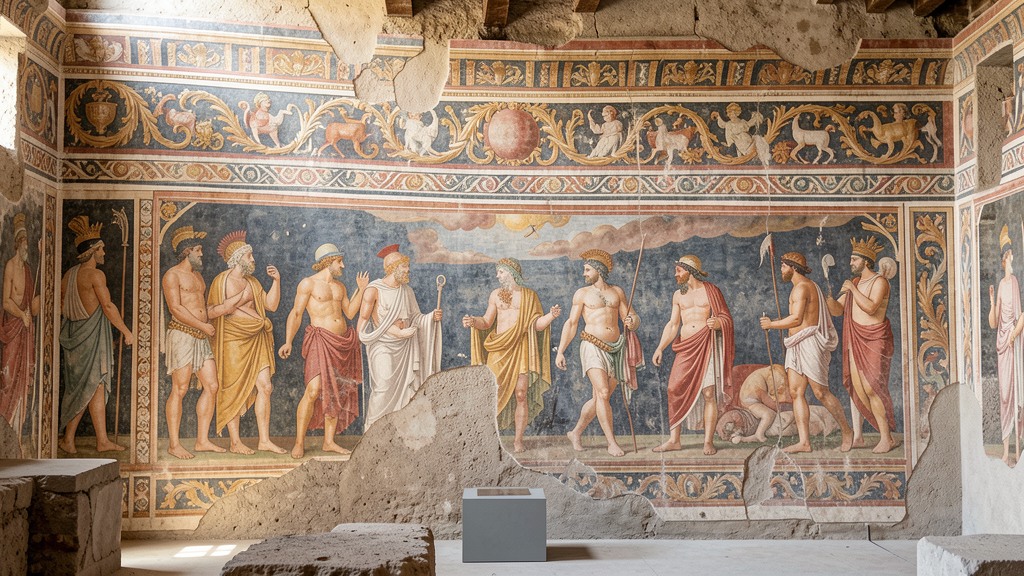
Ancient Roman fresco in Pompeii

Articles & Guides

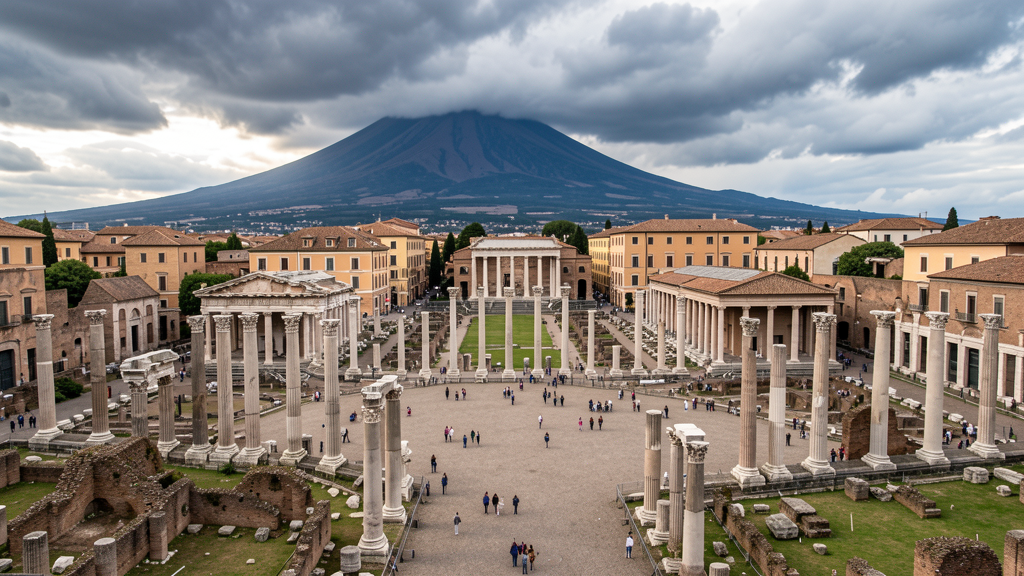
The Forum of Pompeii

The History of Pompeii

From Greek colony to Roman municipal capital, discover how Pompeii grew from a small settlement into one of the most prosperous cities in the Roman Empire before its dramatic end.

The Founding: Ancient Greek settlers established Pompeii around the 6th century BC near the mouth of the River Sarno. The city was strategically positioned on a volcanic plateau overlooking the Bay of Napoli.

Roman Rule: After a siege by the Roman General Sulla in 89 BC, Pompeii became a Roman colony. The city flourished under Roman rule, attracting merchants, farmers, and wealthy vacationers who built luxurious villas in and around the city.

The Eruption: On August 24, 79 AD, Mount Vesuvius erupted catastrophically. In just 24 hours, the city was buried under nearly 6 meters of volcanic ash and pumice. Pliny the Younger documented the disaster from across the bay, providing one of the earliest known volcanic eruption accounts.

Rediscovery: The city was accidentally rediscovered in 1748 during an excavation ordered by King Charles VII of Naples. Systematic archaeological work began, revealing the remarkably preserved streets, buildings, and artifacts of everyday Roman life.
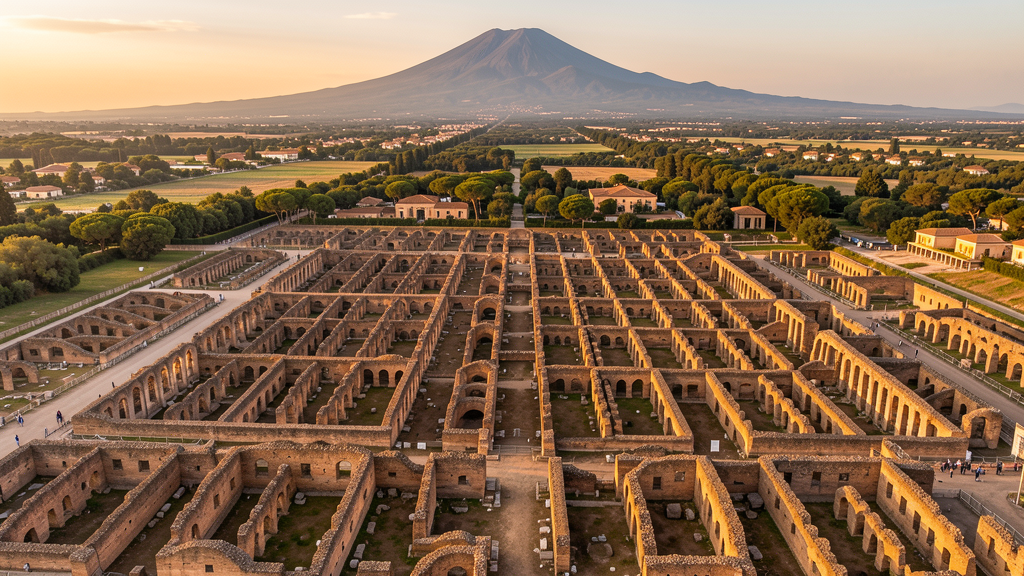
Aerial view of Pompeii archaeological site

The Archaeological Excavations

Over 250 years of excavations have revealed a city frozen in time. Learn about the techniques used to uncover Pompeii and the ongoing preservation challenges facing archaeologists today.

First Excavations: When excavations began in 1748, the primary goal was to find beautiful artifacts and Roman antiquities rather than to understand daily life. Early archaeologists often destroyed important context in their rush to extract statues and frescoes.

Systematic Archaeology: Modern excavation techniques began in the 20th century, treating the site as a time capsule. Archaeologists now document everything in situ, from the placement of bodies to the contents of kitchen shelves.

Recent Work: The EU-funded Great Pompeii Project (2012-2021) focused on stabilizing structures, improving drainage, and protecting frescoes from weather damage. This included work on the House of the Vettii, the House of the Faun, and the Villa of the Mysteries.

Ongoing Challenges: Weather, mass tourism, and insufficient funding continue to threaten the site. Estimates suggest only about two-thirds of the city have been excavated, leaving much of Pompeii still buried beneath modern Naples.

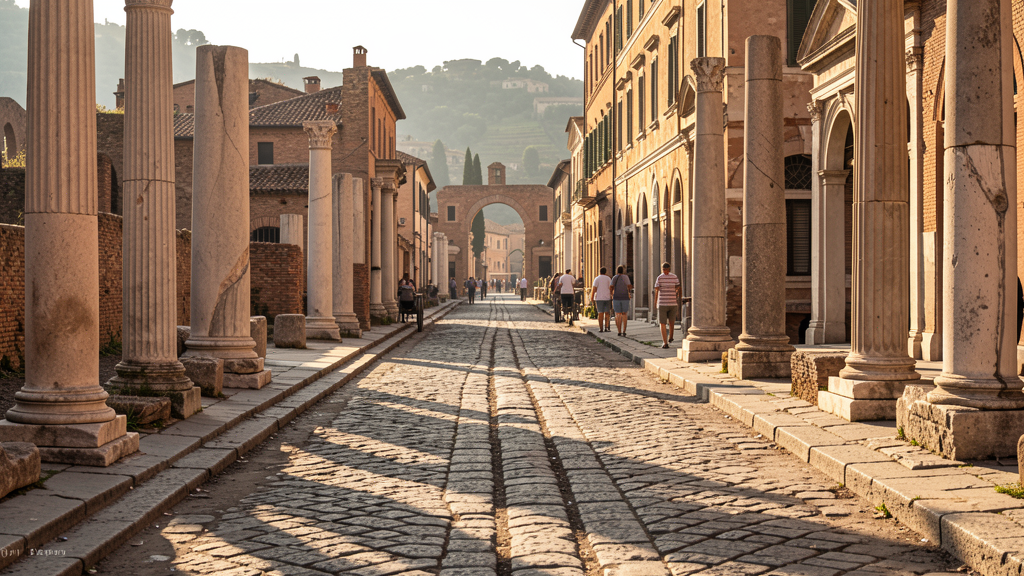
Pompeii street with ancient cart ruts

Daily Life in Ancient Pompeii

What did ordinary Pompeians eat for breakfast? How did they spend their leisure time? Explore the remarkable evidence of daily life preserved in the ash for nearly two thousand years.

Food and Dining: Pompeii had over 200 thermopolia — ancient fast-food restaurants — where citizens could buy hot food and wine. Bread ovens still contain carbonized loaves. Garum, a fermented fish sauce, was the universal condiment of Roman cooking.

Entertainment: Citizens enjoyed gladiator games at the large amphitheater, attended theatrical performances, and bet on chariot races at the nearby stadium. Public baths were a daily ritual, offering hot, warm, and cold plunge pools.

Commerce: The Forum served as the main marketplace where merchants sold wine, olive oil, garum, and handmade goods. Evidence of workshops, laundries, and even a fullery (cloth-cleaning business) has been found throughout the city.

Religion: Pompeians worshipped a wide range of gods including Jupiter, Venus, Apollo, and the household Lares. Households kept small lararia (household shrines) where they made daily offerings to their ancestral spirits.

Temple of Apollo in Pompeii

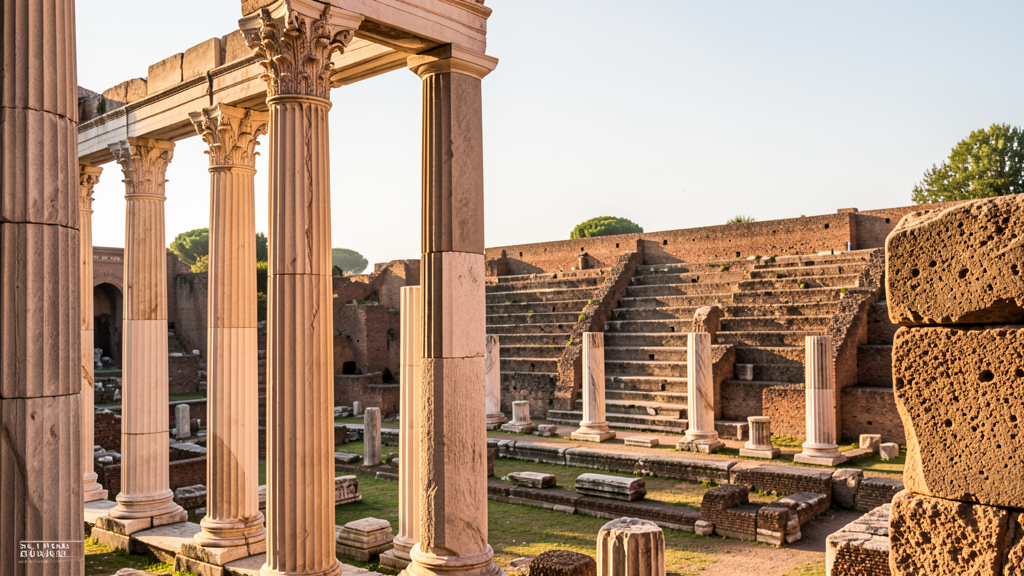
The Forum and Temples

The political and religious heart of Pompeii, the Forum was where citizens gathered for commerce, legal proceedings, and religious festivals. Its temples still convey the grandeur of Roman civic life.

The Forum Square: Measuring approximately 130 by 35 meters, the Forum was the main public space of Pompeii. Surrounded by the most important political, religious, and commercial buildings, it served as the city's central hub.

Temple of Jupiter: The most important temple in Pompeii stood at the north end of the Forum. Its six Corinthian columns still stand today, offering a glimpse of the building's former grandeur. The temple was dedicated to Jupiter, Juno, and Minerva.

Temple of Apollo: One of the oldest religious sites in Pompeii, the Temple of Apollo was originally built in the 6th century BC and later rebuilt in Roman style. A bronze statue of Apollo originally stood in the temple's center.

Macellum: The covered food market of Pompeii was a busy commercial center where meat, fish, vegetables, and spices were sold. Its distinctive circular layout and fish tanks still visible today mark it as one of the best-preserved Roman markets.

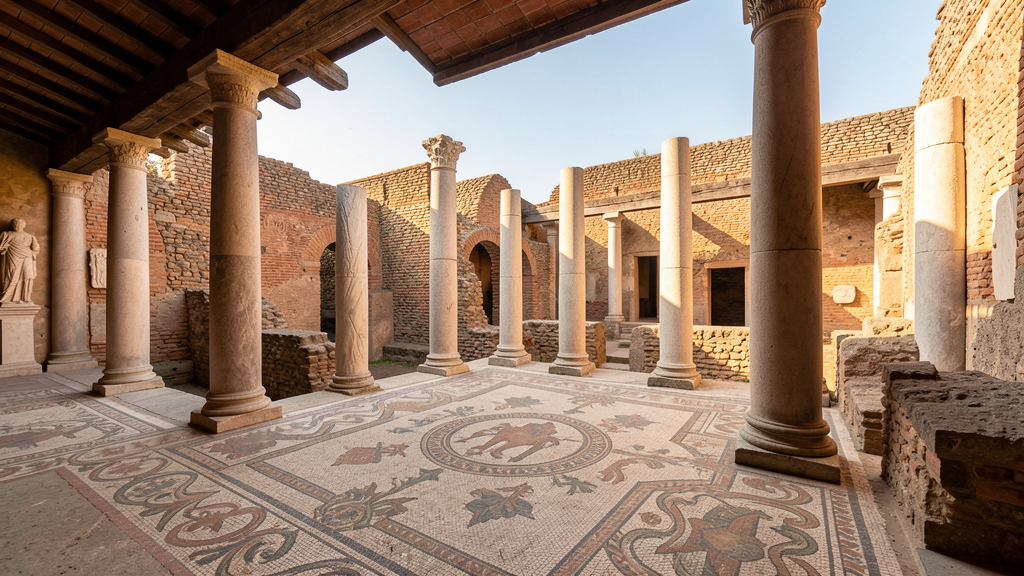
Ancient Roman domus house in Pompeii

Villas and Domus Houses

Pompeii's most impressive private residences reveal the luxury of Roman domestic life — from elaborate mosaic floors to private bath suites and decorative frescoes in every room.

House of the Faun: Named after a bronze statue of the satyr Faun found in its main hall, this was the largest private residence in Pompeii, covering nearly 3,000 square meters. Its most famous feature is the Alexander Mosaic depicting Alexander the Great in battle.

House of the Vettii: A remarkably well-preserved middle-class home featuring intricate frescoes in the Fourth Style. The house contains a famous series of erotic frescoes that were once considered too explicit for public display.

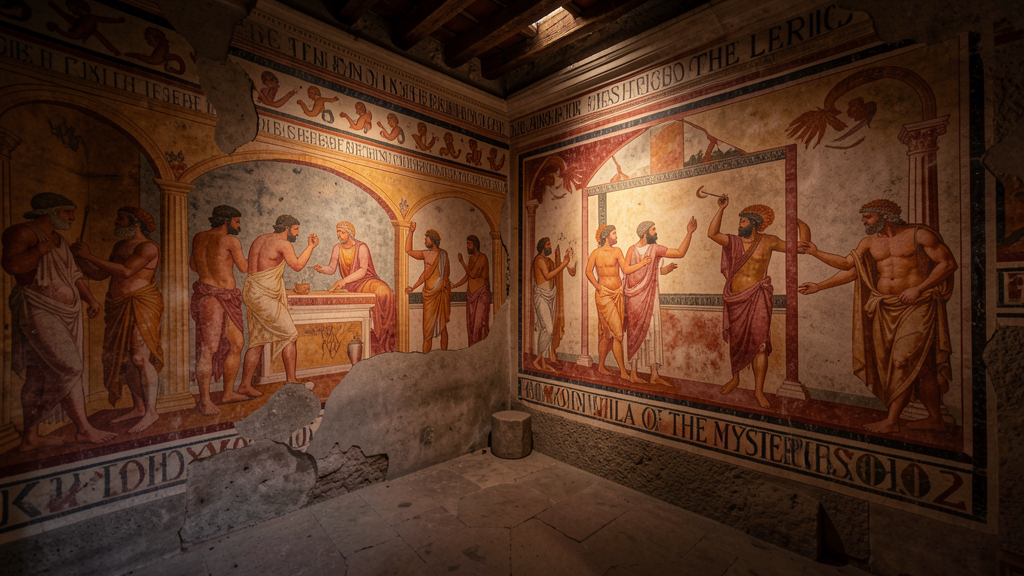
Villa of the Mysteries: Located just outside the city walls, this villa contains one of the most important cycles of ancient paintings in existence. Its frescoes depicting what appear to be initiation rites into a mystery cult are masterpieces of Roman art.

The House of the Painter: Named for a fresco depicting a figure dressed in white robes holding writing implements, this house features an unusual number of high-quality paintings and may have belonged to an artist or art collector.

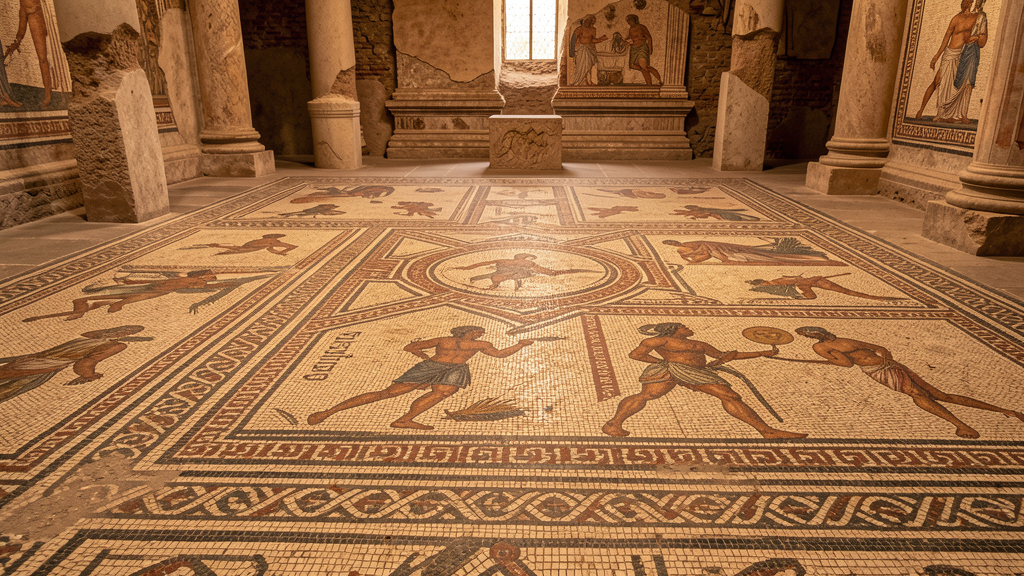
Ancient Roman mosaic in Pompeii

Mosaics and Frescoes

Pompeii is an art museum in the open air. The city's mosaics and frescoes range from humble kitchen floor tiles to masterpieces of Roman wall painting rivaling anything in the world's great museums.

Mosaic Art: Mosaic floors were made from small cubes of colored stone or glass called tesserae. The Alexander Mosaic in the House of the Faun is considered one of the greatest surviving examples of ancient mosaic art, measuring nearly 5 by 3 meters.

Painting Styles: Roman frescoes in Pompeii are classified into four distinct styles. First Style: imitation marble. Second Style: architectural perspective and mythological scenes. Third Style: delicate ornamental panels. Fourth Style: complex compositions with elaborate architectural backgrounds.

Subject Matter: Paintings depicted mythological scenes (Odysseus, Diana, Apollo), domestic activities, architectural vistas, and decorative patterns. The erotic paintings, while controversial, represent an important aspect of Roman art and culture.

Conservation: Many frescoes are now protected with special shelters and consolidating treatments. The volatile organic compounds from the remaining organic materials in the volcanic ash continue to threaten paint layers, requiring ongoing conservation work.

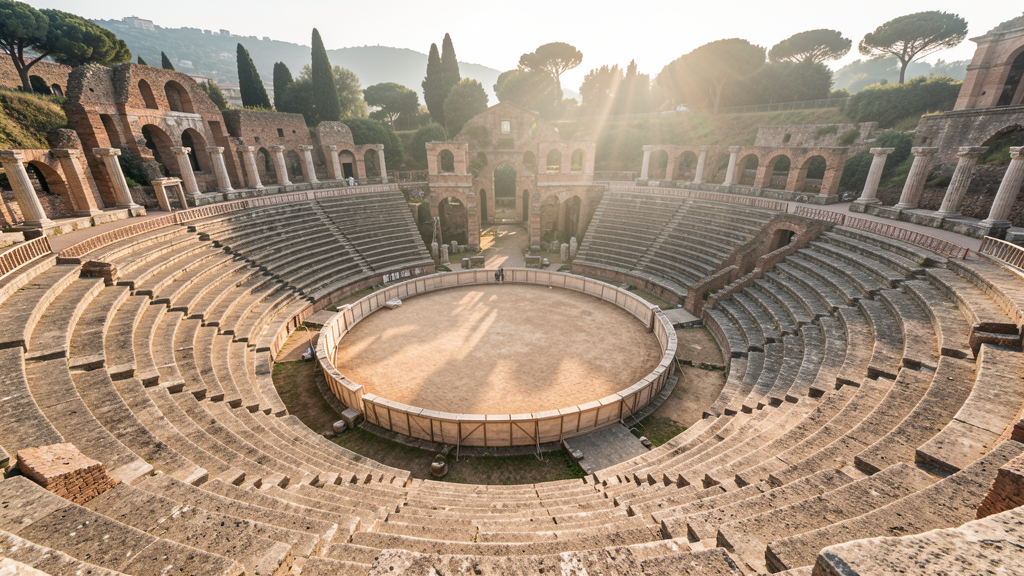
Ancient Roman amphitheater in Pompeii

The Theatre and Amphitheatre

Entertainment was central to Roman life, and Pompeii's entertainment venues were among the most impressive in the ancient world. Two theaters and a gladiatorial arena still bear witness to the city's vibrant public life.

The Large Amphitheater: Built around 70 BC, Pompeii's amphitheater is the oldest surviving Roman amphitheater known. It could hold approximately 20,000 spectators who gathered for gladiatorial combat and wild beast hunts.

The Quadriporticus: The covered walkway surrounding the arena served as a shelter for spectators during hot weather or rain. It also functioned as a training ground for gladiators before they entered the arena.

The Large Theatre: The Teatro Grande, seating about 5,000, was used for drama and musical performances. Partially carved into the volcanic rock and partially constructed with concrete, it had a roof and excellent acoustics.

Gladiatorial Combat: The gladiatorial school (Ludi) discovered in 2017 is one of the most important recent finds, revealing the training facilities, sleeping quarters, and daily life of Roman gladiators.

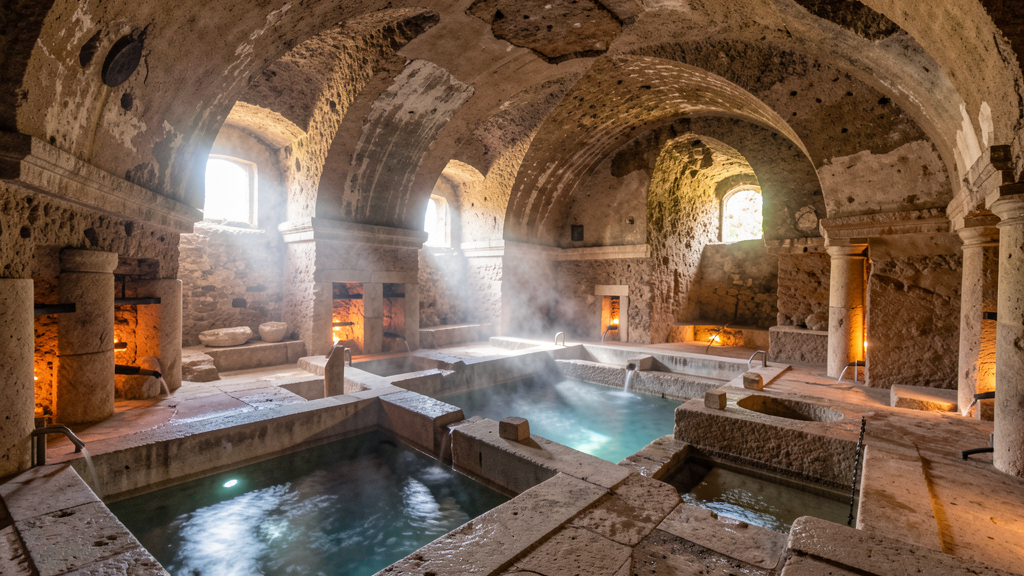
Thermal baths of Pompeii

Practical Visitor Information

From ticket options and opening hours to the best routes through the site and essential items to bring, this guide covers everything you need to plan a smooth and rewarding visit to Pompeii.

Opening Hours: Pompeii is open daily except December 25th and January 1st. Summer hours (April to October) are 9:00 AM to 7:00 PM, with last entry at 5:30 PM. Winter hours are 9:00 AM to 5:00 PM.

Tickets: The standard ticket costs 18 euros and includes entry to all areas of the archaeological park. Children under 18 from EU countries enter free. The Pompeii + Oplontis + Stabiae ticket offers access to additional sites.

What to Bring: Wear comfortable walking shoes — the terrain is uneven and can be slippery. Bring sun protection, water, and a hat. The site has limited shade, so early morning visits are recommended in summer.

Audio Guides: Audio guides are available in multiple languages and strongly recommended for understanding what you are seeing. Guided tours with expert archaeologists offer a deeper experience at additional cost.

Villa of the Mysteries in Pompeii

How to Reach Pompeii

Located just south of Naples, Pompeii is easily accessible by train, bus, and car. Here is everything you need to know about making the journey to the ancient city.

By Train: The Circumvesuviana train from Napoli Centrale to Pompei Scalo station takes about 35 minutes and runs frequently. The SFM3 line from Sorrento also stops at Pompei Scalo. From Salerno, take the regional train to Pompei.

By Bus: Several bus companies operate routes from Naples, Salerno, and Sorrento to Pompeii. Bus 4 connects the Pompei Santuario station to the main archaeological area entrance.

By Car: If driving from Naples, take the A3 Napoli-Salerno motorway and exit at Pompei Ovest. A large parking area is available near the entrance. Note that summer traffic can be heavy.

Where to Stay: The town of Pompei itself offers a range of accommodations from budget guesthouses to mid-range hotels. For a wider selection, consider staying in Naples or Sorrento and making a day trip.

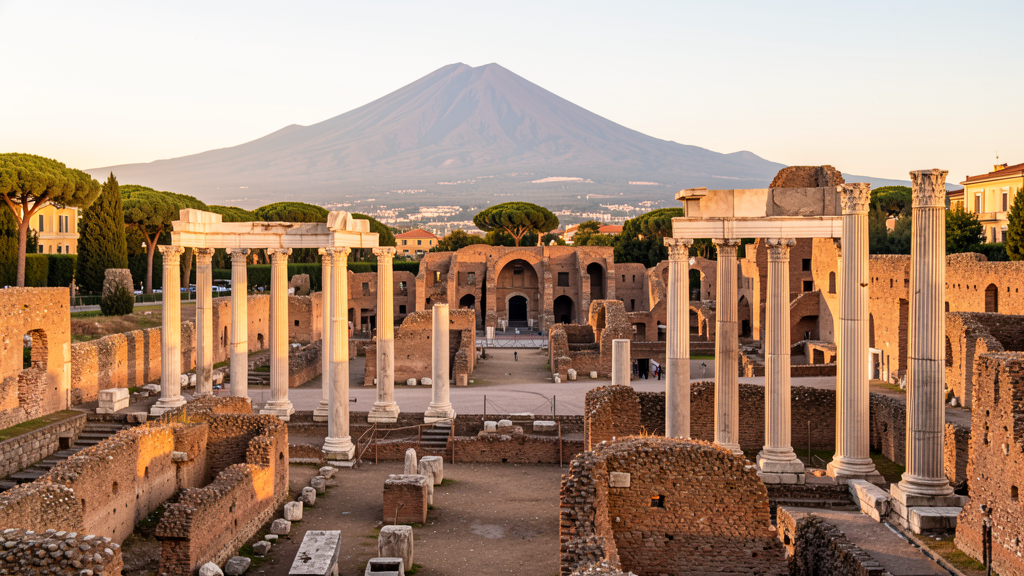
Pompeii ruins with Mount Vesuvius

Seasons and Best Times to Visit

Choosing when to visit Pompeii can make or break your experience. Summer crowds and heat can be overwhelming, while winter visits offer a more contemplative atmosphere — here is what to expect in each season.

Spring (April to June): This is arguably the best time to visit. Temperatures range from 18 to 26 degrees Celsius, wildflowers cover the site, and the summer crowds have not yet peaked. Easter week can be very busy.

Summer (July to August): Hot and crowded. Temperatures regularly exceed 35 degrees and the volcanic ash amplifies the heat. Early morning visits are essential. Summer is when Pompeii receives the most visitors, with queues at the entrance.

Autumn (September to November): Pleasant temperatures return and crowds diminish significantly. October and November offer excellent visiting conditions, though occasional rain can occur. October is particularly beautiful.

Winter (December to March): The quietest season. Average temperatures of 10 to 15 degrees make for comfortable exploration, though some facilities may have shorter hours. Christmas and New Year see a spike in visitors.

Practical Advice for Your Visit

Start Early

Arrive at or before opening time. The site is enormous and you will want several hours to explore. Early morning in summer means less heat and fewer crowds.

Wear Proper Shoes

The ancient streets are paved with uneven volcanic stone. Flip-flops and sandals with thin soles will make your visit miserable. Closed hiking shoes with good grip are essential.

Bring Water

Water is expensive inside the site and shade is scarce in summer. Carry at least one bottle per person. A small backpack is better than a shoulder bag for navigating narrow streets.

Book a Guide

An audio guide or a guided tour will transform your experience. Without context, the ruins can seem like a pile of rocks. A knowledgeable guide brings every wall and column to life.

Visit Twice if Possible

The site is too large to see properly in one visit. If you have the time, split your trip into two half-days. You will see and understand far more on the second visit.

Respect the Site

Many frescoes are now protected behind glass and rope barriers. Do not touch the walls, do not lean on structures, and do not take photographs with flash. Help preserve this irreplaceable heritage.

Visit Throughout the Year

Spring
April – June
  • Wildflowers blooming across the site; Pleasant 18-26°C temperatures; Peak wildflower season in April; Easter week is very busy
Summer
July – August
  • High temperatures exceeding 35°C; Largest crowds of the year; Early morning arrivals essential; Shade is extremely limited
Autumn
September – November
  • Temperatures return to comfortable 15-25°C; September through November is excellent; October foliage adds atmosphere; Rain occasionally
Winter
December – March
  • Fewest visitors of the year; Cool 10-15°C temperatures; Comfortable for long visits; Some areas may have reduced hours; Christmas and New Year busy

Frequently Asked Questions

A minimum of 3-4 hours is needed to see the main areas. Dedicated visitors with a guide often spend 5-6 hours. If you also want to explore the suburban villas and peripheral areas, plan a full day or two separate visits.
Partially. Some main streets and larger domus are accessible, but many areas have uneven volcanic stone, steep steps, and narrow passages. Contact the park authority or your tour operator for specific accessibility information before visiting.
Yes, photography for personal use is permitted throughout the site without flash. Tripods and professional photography equipment require a special permit. Some areas with frescoes have restricted photography to protect the artwork.
There are cafes and toilets near the main entrance. The on-site restaurant near the Forum offers basic meals. Outside the walls, the modern town of Pompei has excellent pizza restaurants and cafes within easy walking distance.
The Circumvesuviana train from Napoli Centrale to Pompei Scalo is the fastest and most economical option at around 4 euros each way. The journey takes 35-40 minutes with frequent departures throughout the day.
Advance booking is recommended during summer and Easter, when queues can exceed two hours. Online tickets cost the same as walk-up prices and guarantee entry at your chosen time slot.